
Revenge re-entry
A new trade within 10 minutes of a loss, at the same size or bigger. The classic "I'll win it back" trade.
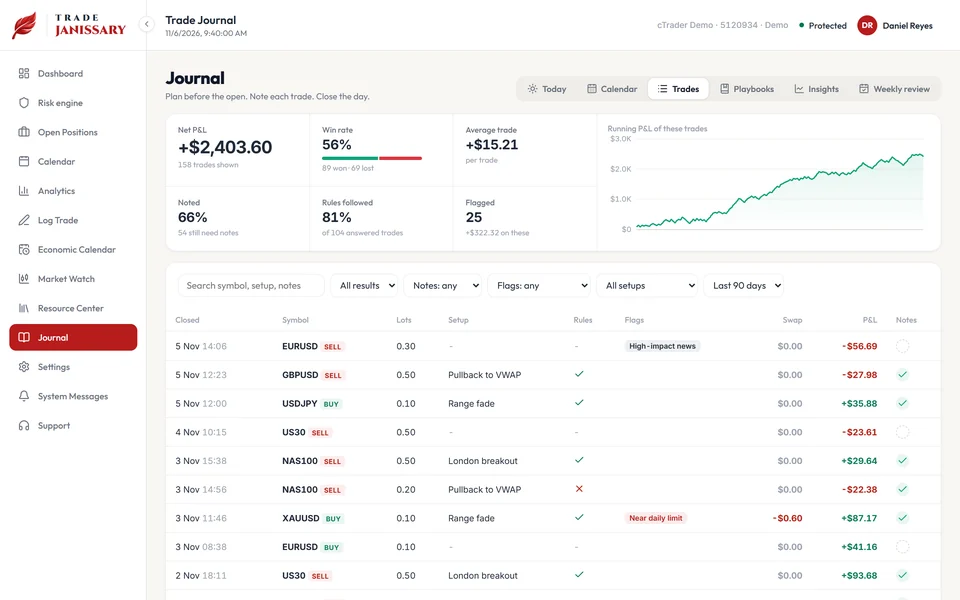
Most trading journals are spreadsheets you stop filling in by Wednesday. Trade Janissary's forex trading journal fills itself from your cTrader or MT5 account, then points out the habits that are costing you money: the revenge re-entry, the sudden size jump, the trade placed right on top of the news.
01 / Behaviour flags
You can't fix a pattern you can't see. Every trade is checked against your own history, and anything that looks like an emotional decision is flagged in the journal.
A new trade within 10 minutes of a loss, at the same size or bigger. The classic "I'll win it back" trade.
A position at least 1.5× your usual lot size. Usually the sign of a trader trying to force a result.
More trades than you planned for the day in your morning plan. Overtrading, measured instead of guessed.
Trades taken when most of your daily loss limit was already used: the moment risk-taking tends to go up, not down.
Entries within 10 minutes of a high-impact release, before or after, when spreads widen and price jumps. The flag names the release.
Trades opened within an hour of a lockout ending, before the frustration has had time to wear off.
02 / Every trade, on its own chart
Open a trade and, while your account is connected, it's drawn on your broker's own price history: where you got in, where you got out and how long you held. Next to the chart is your journal entry for that trade.
03 / The daily routine
Before the session, write down what you'll trade, how many trades you'll allow yourself and the rule you'll focus on today.
Trades arrive from your account automatically. Add a quick note, your emotion, the setup and a screenshot while it's fresh.
Close the day with a short review. Your review streak, weekly review and goals keep the habit going; gentle reminders stop after a few ignored ones.
04 / Analytics and calendar
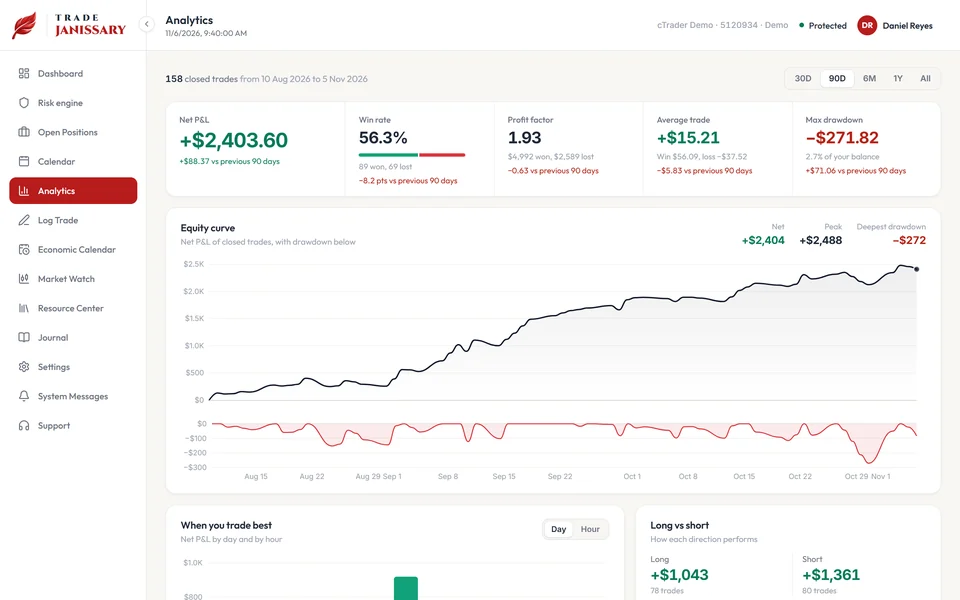
Which hours do you make money in, and which do you give it back in? Are your longs better than your shorts? Which symbols should you stop trading? Analytics answers these with your own trades.
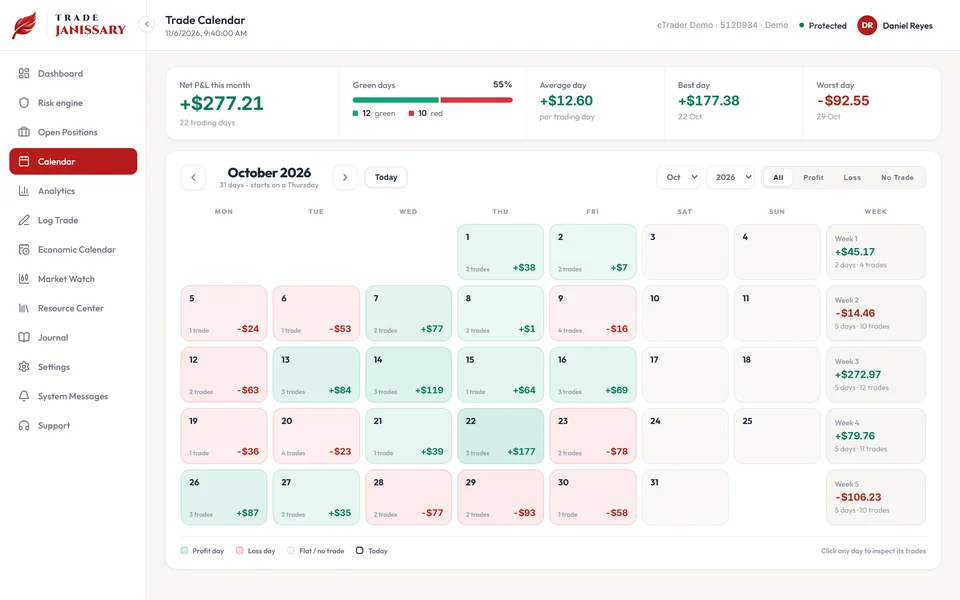
A P&L calendar with weekly totals, your green-day ratio, average day, best and worst day. Click any day to see the trades behind it.
Patterns jump out of a calendar that hide in a table: the Mondays you always give back, the Fridays you shouldn't trade at all.
05 / Janissary Score
The Janissary Score rates your trading from 0 to 100 using six parts: profit factor, drawdown, win rate, the size of your wins against your losses, consistency, and discipline, which drops every time you break a rule.
One lucky week can't make you Elite. The score needs a real track record, so it's provisional until you have enough trades, and it moves slowly in both directions.
Keep reading
Most blown trading accounts come from one bad day, not a bad strategy. The psychology behind it, the recovery maths and the fix that works.
Read the articleTrading journal4 min readWhat to record in a trading journal, how to review it, which patterns to look for and how to keep the habit going, with a simple daily and weekly routine.
Read the articleTrading psychology4 min readWhat trading discipline really means, why most traders struggle with it, and a practical system of rules, routines and enforcement to build it.
Read the articleTrade Janissary opens to the public soon. Join the waitlist and we'll email you the day it does. Your account should still be there at the end of the month.
Public launchComing soon
 cTrader
 MetaTrader 5
For forex, CFD and prop firm traders, with any broker that offers them.